NMAT Score vs Percentile: What Your Scaled Score Actually Means
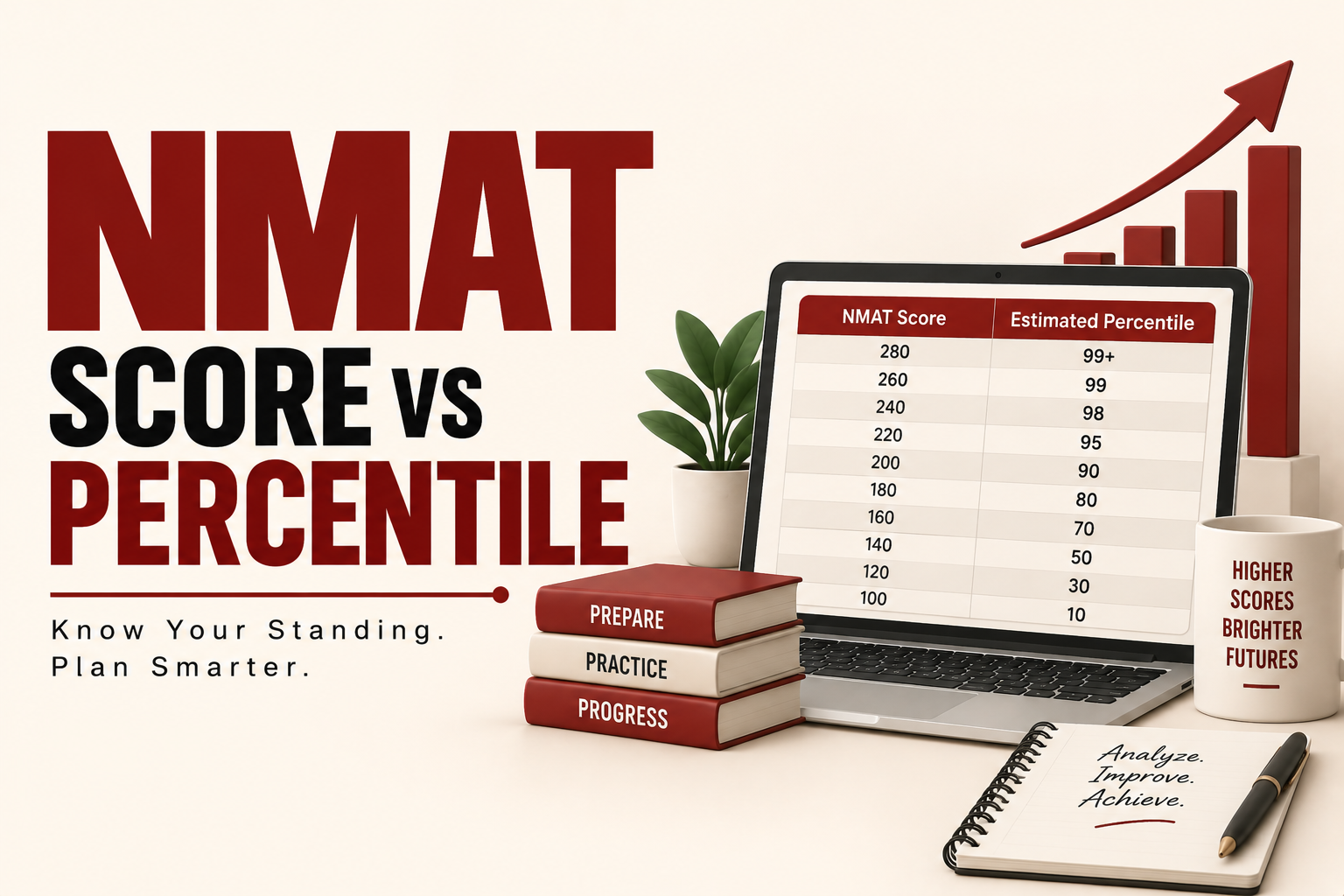
If you're searching for "NMAT score vs percentile," there's something worth knowing before you look at any table, including this one. GMAC stopped officially publishing NMAT percentile figures on scorecards a few cycles ago. Your actual scorecard shows only your scaled score, a number between 36 and 360. Every percentile figure you find online, including here, is a third-party estimate built by analysing past test-taker data, not an officially confirmed GMAC number for the current cycle. That doesn't make the estimates useless, it just means you should treat them as an informed guide, not a guarantee.
How NMAT Scoring Actually Works
NMAT uses a scaled scoring system, not a simple percentage or raw mark. Each of the three sections, Language Skills, Quantitative Skills, and Logical Reasoning, is scored on its own 12 to 120 scale, all three weighted equally, adding up to a total scaled score between 36 and 360.
The reason it's "scaled" rather than raw is genuinely important. NMAT runs across many different dates and time slots between November and December, and no two versions of the test are exactly identical in difficulty. GMAC uses Item Response Theory (IRT), an adaptive scoring model where the questions you get, and how you perform on them, feed into an underlying ability estimate, which then gets converted into your scaled score. Higher-scoring candidates are typically presented with more difficult questions as the test progresses. This is specifically designed to make a 230 scored on one test date genuinely comparable to a 230 scored on a different date, even if the actual questions were different and of different difficulty.
Why Percentile Still Matters, Even Without an Official Number
Even though GMAC doesn't publish it directly, percentile is still the practical way to understand where you stand, since institutes shortlist based on relative performance across the entire testing window, not an absolute score in isolation. Percentiles are calculated only after the full testing window closes, since NMAT allows attempts across nearly two months, your percentile reflects your standing against everyone who took the exam across that entire period, not just people on your specific test date.
Estimated Score-to-Percentile Mapping (Third-Party Analysis, Not Official)
Based on analysis of recent official score distributions by exam-prep platforms, here's the general shape of the relationship.
| Approximate Score | Approximate Percentile |
|---|---|
| 200 | ~49th percentile |
| 220 | ~77th percentile |
| 230 | ~87th percentile |
| 240 | ~94th percentile |
| 255 | ~99th percentile |
The most important pattern in this table: percentile growth accelerates as your score climbs. The jump from 200 to 220 (20 marks) takes you from roughly the 49th to the 77th percentile, a 28-point jump. The jump from 240 to 255 (just 15 marks) takes you from the 94th to the 99th percentile, a 5-point jump for a smaller score gain. In practical terms, the marginal value of each additional mark increases as you get closer to the top, meaning focused improvement near your current level often pays off more than you'd expect.
What Counts as a "Good" Score in 2026
Third-party estimates generally place a genuinely competitive score for Tier-1 and Tier-2 institutes at 225 and above. NMIMS Mumbai's expected 2026-27 cutoff sits around 209, with sectional cutoffs of roughly 60-62 per section, but clearing the minimum cutoff only qualifies you for the next selection stage, it doesn't secure admission. Aiming for 230 or higher puts you in a meaningfully stronger position for serious contention, not just eligibility.
How to Use This Practically
Set score-based milestones, not a single target number. Rather than aiming vaguely for "as high as possible," use the accelerating-percentile pattern to set staged goals, if your mocks are consistently landing around 215-220, the next meaningful milestone is 230, not an arbitrary jump to 255.
Track your mock scores as staged progress, not random fluctuation. If your practice scores move between 215, 225, and 230 across different mocks, treat these as three distinct stages of improvement rather than noise, each represents a real, different percentile band.
Don't fixate on the maximum score of 360. It's a theoretical ceiling almost nobody approaches. Realistic, competitive targets sit in the 225-255 range depending on your specific institute goals.
Remember your final percentile reflects the entire testing window, not just your test date. A strong score early in the window and a strong score late in the window are judged against the same full pool of candidates once results are out.
Prepare for NMAT 2026
Want the full pattern breakdown first? Read our guide: NMAT 2026 Exam Pattern
Curious about real placement data by institute? Read: NMAT Top Colleges: Cutoff, Placements, Fees & Recruiters